
The FIFA World Cup always achieves something that very few sporting events can: it brings the world to a standstill for a few weeks. Millions of people follow the matches, discover new cultures and share the same passion.
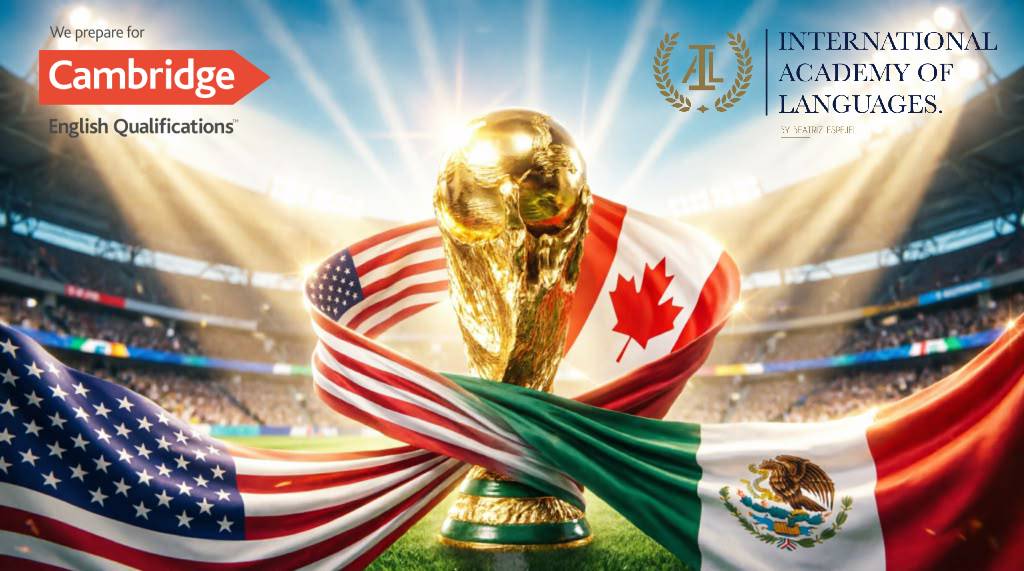
However, the 2026 edition is unlike any other. Not only has it brought together more national teams than ever before, but it is also the first World Cup to be jointly hosted by three countries. The United States, Canada and Mexico are sharing the organisation of a tournament that promises to make football history.
Beyond the excitement on the pitch, this championship once again highlights that sport is one of the world’s most powerful universal languages and that speaking foreign languages, especially English, is essential for the thousands of professionals working behind an event of this scale.
The 2026 FIFA World Cup will go down in history for several reasons.
It is also the edition with the highest number of participating teams since the competition was first established in 1930. FIFA has introduced a much more ambitious format designed to increase international representation and provide opportunities for national teams that previously faced a much more difficult qualification process.
The tournament is taking place from 11 June to 19 July 2026, with the opening match held in Mexico City and the final taking place at New York New Jersey Stadium (MetLife Stadium).
A total of 16 host cities are welcoming the tournament:
United States (11 host cities)
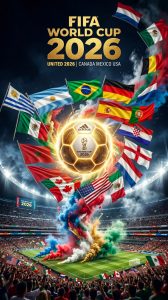
Mexico (3 host cities)
Canada (2 host cities)
Although all three countries are sharing hosting duties, the United States will stage the majority of the matches, including every game from the quarter-finals onwards and the tournament’s final.
Until the 2022 FIFA World Cup in Qatar, the tournament featured 32 national teams. In 2026, that number has increased to 48 teams, making it the largest World Cup ever held.
The new format works as follows:
Thanks to this new format, the competition will feature 104 matches, compared with the previous total of 64. This means more fixtures, more travelling fans and an even greater organisational challenge.
The expanded format has also increased the number of participating countries.
Among the qualified teams are many of the tournament favourites, including:

Spain
France
Argentina
Brazil
England
Germany
Portugal
The Netherlands
Belgium
Croatia
Uruguay
Mexico
United States
Canada
Morocco
Japan
Alongside these footballing powerhouses, the tournament also includes nations returning to the World Cup after several years away, as well as countries making historic appearances thanks to the expanded format, reflecting the growing diversity of international football.
When we think about the World Cup, we usually picture the matches themselves. However, behind every game lies an enormous international operation.
Thousands of journalists, volunteers, translators, hotel staff, airport personnel, security teams, healthcare professionals, event organisers and tourism specialists work for weeks to ensure everything runs smoothly.
With a tournament spread across three countries and welcoming millions of international visitors, communication becomes one of its greatest challenges.
Organising an event of this scale depends heavily on effective communication.
English will once again be the common language used across sports organisations and for professionals looking to build careers in sectors such as tourism, event management, sports marketing, communications, international relations, hospitality and aviation.
At International Academy of Languages, we believe that learning a language opens the door to new personal and professional opportunities. Whether your goal is to travel with greater confidence or to pursue a career at international events, our courses will help you communicate with confidence.
FIFA – 2026 FIFA World Cup: Host cities, schedule, format and participating teams.
FIFA – Official 2026 FIFA World Cup competition format.
El Mundial de fútbol siempre consigue algo que muy pocos acontecimientos deportivos logran, detener el mundo durante unas semanas. Millones de personas siguen los partidos, descubren nuevas culturas y comparten una misma pasión.
Sin embargo, la edición de 2026 está siendo diferente a cualquier otra. No solo porque ha reunido a más selecciones que nunca, sino porque también está siendo el primer Mundial organizado de manera conjunta por tres países, Estados Unidos, Canadá y México, compartirán la organización de un torneo que promete marcar historia del fútbol.
Además del espectáculo deportivo, este campeonato volverá a demostrar que el deporte es uno de los lenguajes universales más poderosos y que dominar idiomas, especialmente el inglés, resulta fundamental para miles de profesionales que trabajan alrededor de un evento de esta magnitud.
La Copa Mundial de la FIFA 2026 pasará a la historia por varios motivos.
Es también la edición con mayor número de participantes desde que se creó la competición en 1930. La FIFA ha apostado por un formato mucho más ambicioso que busca ampliar la representación internacional y ofrecer oportunidades a selecciones que hasta ahora tenían muy difícil clasificarse.
La competición se está celebrando entre el 11 de junio y el 19 de julio de 2026, con el partido inaugural en Ciudad de México y la gran final en el New York New Jersey Stadium (MetLife Stadium).
En total serán 16 ciudades anfitrionas:
Estados Unidos (11 sedes)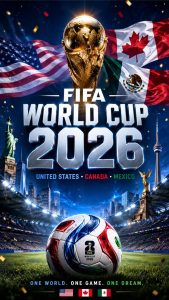
México (3 sedes)
Canadá (2 sedes)
Aunque los tres países compartirán la organización, Estados Unidos albergará la mayor parte de los encuentros, incluidas todas las fases finales a partir de cuartos de final y la final del campeonato.
Hasta el Mundial de Catar 2022 participaban 32 equipos nacionales. En 2026 ese número aumentará hasta 48 selecciones, convirtiéndose en la edición con mayor representación de la historia.
El nuevo sistema funcionará de la siguiente manera:
Gracias a este cambio se disputarán 104 partidos, frente a los 64 que se jugaban hasta ahora. Esto significa más encuentros, más aficionados desplazándose entre ciudades y una organización mucho más compleja.
¿Qué selecciones participan?
El nuevo formato también ha permitido aumentar el número de países representados.
Entre las selecciones clasificadas encontramos algunas de las grandes favoritas, como:
Junto a ellas también aparecen países que regresan a un Mundial tras varios años de ausencia o que vivirán una participación histórica gracias a la ampliación del torneo, reflejando una mayor diversidad del fútbol internacional.
Mucho más que fútbol
Cuando pensamos en un Mundial solemos imaginar únicamente los partidos. Sin embargo, detrás existe una enorme maquinaria internacional.
Miles de periodistas, voluntarios, traductores, personal de hoteles, aeropuertos, cuerpos de seguridad, sanitarios, organizadores de eventos y profesionales del turismo trabajan durante semanas para que todo funcione correctamente.
En un campeonato repartido entre tres países y con millones de visitantes internacionales, la comunicación será uno de los grandes desafíos.
La organización de un evento de estas dimensiones depende en gran medida de la comunicación.
El inglés volverá a ser el idioma común entre organizaciones deportivas para quienes quieran desarrollar su carrera en sectores como: turismo, organización de eventos, marketing deportivo, comunicación, relaciones internacionales, hostelería, o aviación.
En International Academy of Languages creemos que aprender un idioma es abrir la puerta a nuevas experiencias personales y profesionales. Tanto si tu objetivo es viajar con mayor confianza como si aspiras a trabajar en eventos internacionales, nuestros cursos te ayudarán a comunicarte con seguridad.
FIFA – Mundial 2026: sedes, calendario, formato y selecciones participantes
FIFA – Formato oficial del Mundial 2026
Alba Domínguez Bravo